
How to Choose Your Journal Tools | Complete Guide 2025
Journaling isn’t just a hobby; it’s a powerful way to clear your mind, reflect on yourself, and boost creativity. If you are using journaling techniques or want to start, it’s essential to know about journal tools too. Journaling tools come in many forms, such as digital journals, physical notebooks, and special creative tools. It’s essential to understand each type and pick the one that doesn’t interfere with your study and allows you to work comfortably. Before you start, make sure to check all your tools, their advantages, and any feasible issues.
You can use any journaling method you like. If you want privacy, start a digital journal—you can add photos, audio, and keep everything hidden easily. If you prefer a physical notebook, you can write meanings, thoughts, and anything you want freely, which is excellent for deep thinking. Specialty tools are made for specific purposes like gratitude, prayer, travel, or bullet journaling, and they help you stay focused on one topic.
Check also: How to Choose Your Journal Pen
What are Journal Tools?
Journal tools are the things that help us record our thoughts, experiences, memories, and ideas in an organized way. You can now record things in different ways—on your phone, your laptop, or by writing them in a notebook. You can take them out anytime for your ease and read or understand them.
Journaling tools are very essential for journaling because they help you save words or sentences so you can understand them better and remember them for a long time.
Read also: Journal Prompts
Benefits of Using Journal Tools
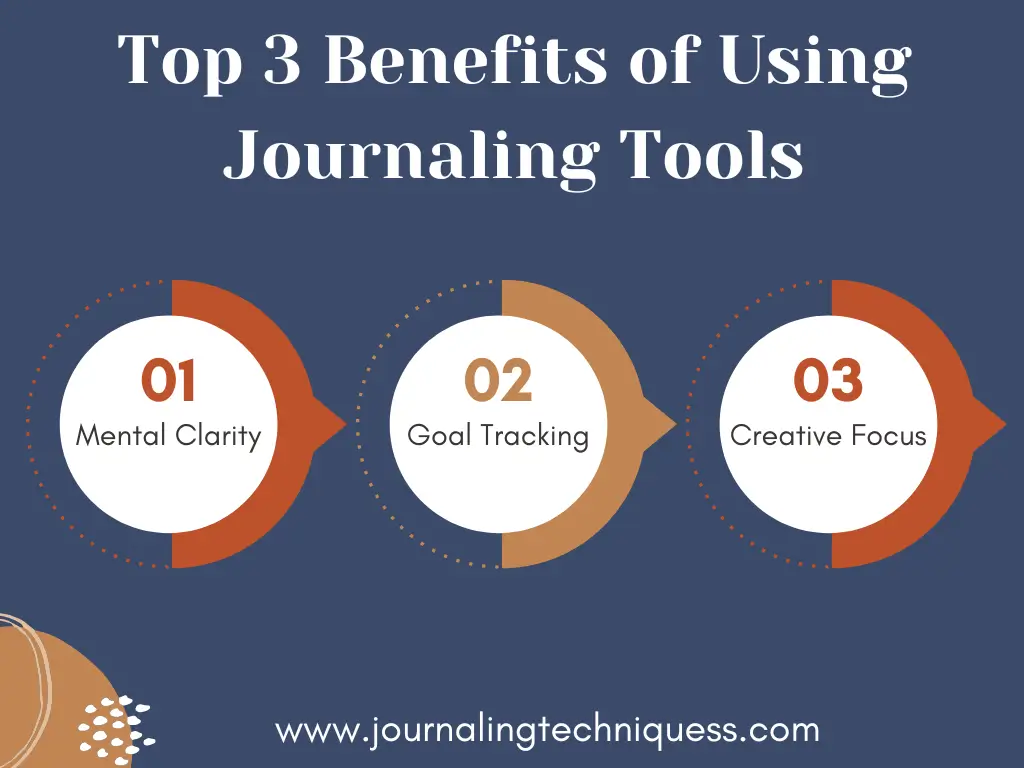
Journaling tools have many benefits. They help improve your memory and make your thinking clearer and better.
- Helps You Stay systematize
- Construct a Daily Writing Habit
- Improves Mental Clarity
- Tracks Your Growth Over Time
- Intensify Creativity
- Keeps Your Memories Safe
- Assist Goal Setting
- Makes Access Easy Anytime, Anywhere
- Inspirit Mindfulness
- Customizable for Your Needs
Check also: Bible Journaling
Types of Journaling Tools
We’ve mentioned various journal tool types here, so you can pick the one that works best and is most beneficial for you.
Digital Journaling Tools
You can use these apps or online platforms to write on your phone or laptop, include photos, and save everything in the cloud. They come with modern tools like privacy settings, reminders, syncing, and mood trackers.
Physical Journal Tools
These are shared notebooks, diaries, and planners where you write by hand. They feel natural and have no distractions, making them magnificent for deep thinking and creativity.
Specialty Journaling Tools
Specialty journals are designed for special uses like thankfulness, prayer, travel, or bullet journaling. They include prompts, sections, and a purpose to keep you focused on the contracted theme.
Read also: How To Journal
Top Digital & Physical Journal Tools
Top Digital Journaling Tools (Apps & Software)
- Day One
- Journey
- Daylio
- Penzu
- Diaro
Top Physical Journaling Tools (Notebooks & Journals)
- Moleskine Notebooks
- Leuchtturm1917 Notebooks
- Field Notes
- Rhodia Notebooks
- Hobonichi Techo
How to Choose the Right Journal Tool
Here, I will share some steps to follow them to help you choose the right journal tool:
Understanding your Journaling Goals and Habits
When you start journaling, know about your goals and habits. Some people like daily reflection, while others prefer long writing with photos or videos.
Platform Compatibility and Privacy Options
Make sure the journal app works on your devices and keeps your data private. Apps like Day One sync across all platforms, while Penzu offers strong secret writing and password protection for personal writing.
Preferred Journaling Style
Choose a journaling style that fits you. Reflectly helps with prompts and mood tracking, but Diaro or Journey lets you write freely.
Cost and Long‑term Use
First, you should know about the journal tools’ cost and how much you use them. Free apps exist, but special tools or multiple journals might cost extra, so read reviews first.
Common Mistakes to Avoid
When you start journaling, you may face problems with journal tools. Here, we discuss common mistakes and learn how to avoid them.
Common Mistakes
- Perfectionism
- Inconsistency
- Overcomplicating
- Surface Writing
- Poor Digital Organization
- No Backups
- Weak Privacy
- Rigid Goals
- Expecting Instant Results
- Copying Others
How to Avoid It
- Write freely, hug imperfection
- Set daily reminder & routine
- Simplify format & tools
- Ask questions that help you think more deeply.
- Use the same tags and categories every time.
- Enable backups & exports
- Use encryption/passwords
- Set flexible, realistic goals
- Be patient & realistic
- Build your own style
FAQs—Frequently Asked Questions
Conclusion
Before starting journaling, you should know which journal tools you need and which one to choose. The most important thing is to select a tool that is easy for you and does not create problems, so you don’t bite off more than you can chew. This article clearly explains how to choose the right tools, their benefits, common mistakes, and how to avoid them.

Hi there! I'm Sara.


