
Top 20 Journaling Techniques That Actually Work (2026)

Have you ever felt flooded with your thoughts and wished you could write them out somewhere? Don’t worry Journaling Techniques have got you covered. Journaling helps you to express your emotions and clear your mind, and understand yourself better. Journaling is a common method of self-discovery, whether you’re looking to heal, reduce stress, or boost your creativity. You can track your daily, weekly, and yearly goals by learning the suitable Journaling Techniques. In this blog, we will explore different journaling techniques, their various types, and the benefits they offer.
What is Journaling?
Journaling is a writing practice that allows you to record your feelings, thoughts, emotions, goals, and daily experiences to understand your life and yourself better. Journaling is not just about writing a daily diary; it’s about self-expression, reflection, and mental organization. By Journaling, you can gain clarity about your growth, help you process your emotions, and track your habits.
People use Journaling as a mirror for their minds; some write a yearly goals list to stay motivated, and others write their emotions and thoughts to calm their minds. The main purpose of writing daily is to create something visible and manageable from your thoughts. It doesn’t matter whether you journal with pen and paper or an app—the main purpose is to get your thoughts out of your mind. If you feel stressed you can also try Infinite Wordle game to relax your mind!
20 Journaling Techniques That Actually Work
Choosing the right journaling techniques helps manage emotions, achieve your goals, and transform your self-expression. Here are 20 proven methods that can help you find your ideal journaling style.
1. Reflective Journaling
Reflective Journaling is one of the most powerful techniques that helps you to understand yourself. This technique revolves around your personal experience, emotions, and thoughts. It helps to understand why you felt that emotion and what you learned from it. The reflective journaling technique is recommended by many therapists to develop emotional intelligence.
For example, if you had a stressful conversation with your colleague at work, you can write what triggered your frustration and how you could respond differently next time. After some practice of this technique, it will help you strengthen your ability to make mindful decisions.
2. Daily Journaling
Daily Journaling is a consistent writing practice in which you dedicate a few minutes each day to write a few lines or a short note about what happened during your day or how you felt. You have to make it a habit, don’t take it as a task. The daily journaling technique helps you to notice changes in your habits, thoughts, and mood. It’s also reduced your mental stress because your thoughts and feelings get out on paper instead of being bottled up.
In daily journaling, you can write anything about yourself, like what your goals are, what makes you happy today, and what upsets you. For example, write one good thing and one challenge from your day. After some time, you’ll notice your stress level is decreasing and your mornings become calmer and easier.
3. Weekly Reflections
Weekly reflection is one of the best journaling techniques for people who are to much busy and do not have time to write daily. In this reflection method, you will get a big picture of your week, and you will have too many things to write. You can do this practice every Sunday evening or before going to bed. Write about all the events of your week, like what made you happy, what gave you stress, and how you tackle these emotions. Over time, these reflections can lead to big improvements.
For example, you write for 15 minutes every Sunday to review your week, including your work progress, health habits, and family time. Following this method, you will realize you’re skipping gym workouts because of your workload. Now you can plan better and keep a healthier balance between work and self-care.
4. As-Needed Journaling
As-needed journaling technique means writing only when something exciting happens or when you’re stressed and want to express your emotions. In this technique, you don’t have any pressure to write daily or weekly; you only need to write when you feel like it —grab your journal and write your thoughts to capture honest emotions at the moment. If you are one of those who don’t like a strict routine for writing a journal, this technique is perfect for you.
5. Gratitude Journaling
Gratitude journaling is all about focusing on the positive events happening in your daily life. In this technique, you will ignore what’s missing in your life and be thankful for the things you have. It doesn’t matter whether it’s small or big. This technique helps you to train your mind to appreciate and notice small good events happening around you. You can follow this practice daily or weekly, but many people love writing down three things they are thankful for before going to bed.
Gratitude journaling removes negativity from your life, shifts your focus to positivity, and makes you more mindful of everyday blessings. For example, being thankful for a good cup of coffee, a kind text from your best friend, or a beautiful sunset. Gratitude journaling doesn’t need any fancy writing; even a short note works perfect.
6. One-Line-a-Day Journaling
One-line-a-day journaling is known for its simplest method. This journaling technique does not require long notes; you only need to write a line on a daily or weekly basis. For example, if you have a great day at work or learn something for the first time, you can write about these experiences in your journal. Over time, these single lines become a memorable record of your experience.
It’s a perfect technique for people with busy schedules who still want to build a journaling habit to track and look back on how much they have changed over months and years.
7. Goal Journaling
Goal journaling is a powerful technique to track your progress towards your goals. In this journaling method, you not only mention what you want, but you also break those goals into small steps and record your progress. It helps you stay focused, motivated, and accountable. For example, you can note what actions you took and what results you got from them. It’s also helpful in adjusting your plan if something isn’t working. After all, slow and steady wins the race.
8. Bible Journaling
Bible journaling is a perfect way to connect with your religious faith. It is a combination of reading, writing, and drawing. Many people use this technique to write their prayers, thoughts, and lessons they have learned from the Bible. It’s not just about writing; it’s also a peaceful form of self-expression.
For example, read a verse from the Bible that speaks to you and learn how God’s words apply to your daily life. You can use a regular notebook or a journaling Bible to record how it strengthens your faith.
You can also decorate your journal pages with stickers and colors to make this experience more meaningful. Bible journaling helps you to understand your spiritual growth and your relationship with God.

9. Devotional Journaling
Devotional journaling helps you on your spiritual journey. It is a faith-based writing technique that allows you to read a devotional page and then write your thoughts, prayers, and reflections on it. The purpose of devotional journaling is to connect your daily experiences with your spiritual beliefs, bringing you closer to God.
For example, you can write about a specific verse that speaks to you, what you learned from it, and how you can apply it in your daily life. This journaling technique serves as a private space for you to express your gratitude, share the struggles you’re facing in your faith, and ask for God’s guidance. Over time, this record became a beautiful collection of answered prayers.
10. Prayer Journaling
Prayer journaling is a beautiful way to converse with God; instead of praying in your mind or speaking aloud, you can write them down. It helps you look back on your life and understand how God beautifully answered your prayers and provided you with the things you once longed for. You can write freely without any hesitation, just like you’re talking to a best friend.
This type of journaling helps you to stay focused during tough times and strengthen your spiritual connection with God. Many people start their journal with “Dear God” and then pour out their prayers. You can also write your thoughts in bullet points; it’s not about being formal or perfect—the main purpose is to pour out your feelings honestly.
11. Free-Writing Journaling
The free-writing journaling technique is famous for its flexibility and creativity. It is very helpful for people dealing with stress and overthinking. The best way to do free-writing journaling is to set a timer for at least 15 minutes and start writing whatever comes to mind without worrying about grammar or structure.
This process helps you to clear your mind blocks and boost your creativity; sometimes, you can discover your hidden emotions. This technique also helps you understand yourself better, process your emotions, and solve problems.
12. Mind Mapping Journaling
Mind mapping journaling is different from regular journaling; instead of writing, we create a visual, organized diagram to explore how different parts of our lives are connected. It’s very useful when you feel overwhelmed, confused, and stuck in your progress.
For example, you create a diagram that starts with your goal in the center, then you draw its branches and add its related thoughts, feelings, and plans. It helps you to organize ideas and strategies to achieve your desired goals.
13. Creative Journaling
Creative journaling is a perfect technique for people dealing with stress and who want to rediscover their joy. In this journaling, we combine creativity with emotions to make a fusion of words and visuals. You can use stickers, doodles, sketches, photos, and magazine cutouts to decorate your journal page. It helps you reduce stress and heal your emotions in a playful way.
For example, you can draw your emotions, write quotes, and even combine colors with poetry. Over time, this technique boosts your mood, and your journal will turn into a colorful record of your emotions.
14. Creating a Life Timeline Journaling
Creating a life timeline journal is the best way to foster self-discovery. You can write reflections on major events of your life. You can draw a straight line and mark all the major changes in your life, such as school achievements, major life changes, relationships, challenges, or turning points.
For example, make a timeline of the important events in your life and briefly describe it; it helps you see how past events shaped you and appreciate your personal growth. With this technique, you can connect with your past, present, and future thoughtfully.
15. Photo Memory Journaling
Photo memory journaling is a great way to preserve memories by combining words and pictures to capture your memorable moments. In this technique, you write a reflection on your favorite moment and attach a photo of that moment. Each photo, with a heartfelt note, describes what was happening, how you felt, and why that moment mattered to you.
Over time, your journal will become a visual story of your struggles and adventures. You can use a notebook, printed photos, or various journal apps for this purpose. Photo memory journaling is a perfect way to reflect on gratitude and relive special moments that shaped who you are today.
16. Bullet Journaling
Bullet journaling is famous for its organized and straightforward format. In this technique, we use short bullet points, symbols, and lists to track our daily experiences. It is the best option for people who don’t like writing long paragraphs.
With this method, you can stay productive while keeping track of your thoughts and habits. Bullet journaling is suitable for everyone, whether you have a busy schedule and want to build a journal habit to stay more mindful.
The format of this technique is very straightforward: use a dot (.) for tasks, a circle (○) for events, and a dash (-) for notes. By following this technique, you can track your daily life and set your tasks. As time passes, your life will become more organized and motivated.
17. Dream Journaling
Dream journaling helps you identify your thoughts, fears, and inspirations hidden in your dreams. This technique is all about writing down the thoughts, emotions, and symbols you saw in your dream. To practice this technique, place a pen and notebook beside your bed when you wake up, and write all the details of your dream that you remember. Over time, you will see how your life is connected to the themes of your dream, which will boost your creativity.
18. Travel Journaling
Travel journaling is a beautiful way to record your adventures, emotions, and experiences while exploring new places. Instead of just taking pictures while traveling, you can write a brief reflection to document the sights, smells, and sounds you feel at that moment. As time passes, your journal will become a time capsule filled with sweet memories.
You can carry a small notebook or use a digital journal app while traveling to write about your day, including unexpected discoveries, food, and people you meet. We recommend using tickets, photos, and map cutouts to make your journal more visually appealing. It helps you to know better how this trip changed your perspective or what this trip taught you.
19. Morning Pages
Morning pages is an effective and widely practiced journaling technique, first time this technique is introduced by Julia Cameron in her book named The Artist’s Way. In this technique, you have to write three pages every morning right after you wake up without worrying about grammar or something perfect. It helps you to clear mental clutter, reduce anxiety, and boost your creativity. By following this technique your mind will be fresh and free from daily distractions, and allow your real thoughts to and emotions to surface.
You can write about anything such as a dream you had last night, plan for the day, or random thoughts that pop up in your mind. After time passes, you’re able to understand your emotions and behavior which enable you to make more mindful decisions. Morning pages are the perfect technique for the artists and writers that want mental clarity before starting their day.
20. Relationship Journaling
Relationship journaling is a powerful technique for understanding the connections in your life. It involves writing about your interactions with others. You can write about how they make you feel, what went well, and what caused tension. You can note the reflections of recent conversations, moments of gratitude toward loved ones, and misunderstandings in your relationship.
This technique helps you to set emotional boundaries and strengthen empathy. If you’re dealing with heartbreak and conflict, this technique can serve as a healing tool and help you be more mindful. You can also use prompts to get started. Some of these prompts are listed below:
- What did I appreciate about my partner today?
- How did I handle a disagreement?
Benefits of Journaling
Journaling is not just about expressing your feelings by putting words on a page. It helps you clear your mind, calm your personality, and focus more on your life. Here are the top 5 benefits of making journaling part of your routine:
Reduces Stress and Anxiety
Writing about your daily experiences and emotions helps you to clear your mind. Instead of keeping everything bottled up, it’s better to pour your feelings on paper. With time, this habit reduces your stress and anxiety—writing helps you get it off your chest.
Improves Emotional Intelligence
Making journaling a habit enables you to understand and manage your emotions. It helps to recognize the feelings that trigger your reactions, as well as the patterns in your reactions. This self-finding also helps to respond more thoughtfully in every situation.
Enhances Creativity
Journaling techniques help you to surface expressions without fear of judgment. Writing a daily journal unlocks your creative thinking. Many writers and artists use different journaling techniques to unlock creativity.
Improves Communication Skills
Journal writing helps you express your thoughts more clearly. It sharpens your structure, improves your vocabulary, and strengthens your articulation. You can practice journaling to enhance your written and verbal communication.
Supports Healing and Emotional Recovery
If you’re dealing with any heartbreak, emotional pain, or trauma, journaling serves as a therapeutic outlet. Writing can help you process and safely release your emotions, and it can help you heal and move forward from your difficult time.
Other Types of Journaling Techniques You Can Try
- Food Journaling Techniques: One of the most no-nonsense ways to really be aware of what you’re eating.
- Fitness Journaling Techniques: A pretty valuable tool for monitoring your workouts and keeping track of progress.
- Travel Gratitude Journaling Techniques: A great way to capture some real memories.
- Health or Wellness Journaling Techniques: Probably the most well-known type of journaling to help you get your mental game on track.
- Finance or Budget Journaling Techniques: The not-so-fun but super helpful way to manage money.
- Reading Journaling Techniques: A cool way for book lovers to dig deep into the books they love.
- Learning or Study Journaling Techniques: A great way to actually keep track of the stuff you’ve learned.
- Parenting Journaling Techniques: A good way for parents to reflect on their experiences.
- Manifestation Journaling Techniques: All about setting goals and staying focused.
- Shadow Work Journaling Techniques: A deep-dive into your own thoughts and feelings.
- Recovery Journaling Techniques: A way to focus on healing and getting back on your feet again.
- Pregnancy or Baby Journaling: A lovely way to document memories of this special time.
- Productivity or Work Journaling: Something to help you boost your performance.
- Fitness Progress Journaling: A good one for keeping your fitness routine on track.
- Dream Interpretation Journaling: A fun way to explore what your dreams are really saying.
- Self-Care Journaling: A calming way to unwind and relieve stress.
- Career or Professional Growth Journaling: A bit of a corporate-sounding technique, but actually really useful.
- Habit Tracking Journaling: Another one of those results-driven techniques to keep you on track.
- Reflective Prompt Journaling: A guided thing to help you reflect on your experiences.
- Vision Board or Future Planning Journaling: All about imagining the future and the world you’d like to be in.
- Stressed on How to Trade in MM2: You can visit mm2 trade checker to do profitable trade.
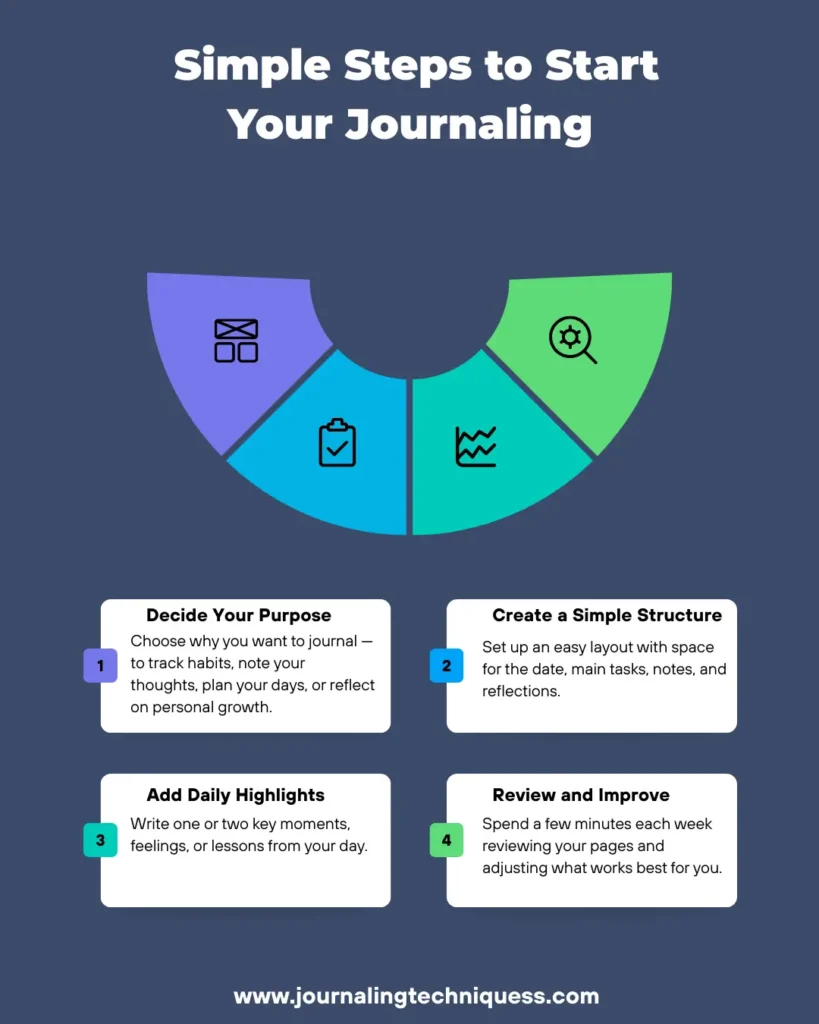
Tips to Help You Start Journaling
Identify Your Why
You should know why you want to journal, as this will help you choose the journaling techniques that fits you best. This will keep you motivated even if you don’t feel like writing.
Find the Right Technique For You
Read and review the creative ideas and journaling styles I mentioned above. This will help you choose the style that works for you. If you are still confused, try a few out, as it’s not necessary to stick to one. You can mix and match, as your journaling style may change with your mood.
Decide on a Routine
Decide how often you want to journal daily, once a week, or just when you feel like it. Also, think about where and what time you’ll write, so it naturally becomes a part of your routine.
Gather Your Tools
Now, it’s time to decide whether you’ll write on a computer or with a pen and paper. Use a program like Notes, Day One, or Word if you use a computer.
Gather your tools so it’s easy to start. For example, if you decide to journal on a computer, close all other tabs the night before and have your app ready. Otherwise, make sure to have your notebook and pen ready whenever you journal.
Make it simple to start so you can easily begin your journaling journey.
Remember a Few Tips
No Judgment
Journaling is all about looking back on your life and your faith, not for perfection. Don’t worry about your messy handwriting or grammar; focus on the present. It’s you who will read and no one else, so relax and write your genuine thoughts and emotions.
Start Small
Don’t start with multiple journals and dedicate hours to writing them every day. This will backfire, as I have already experienced. Start small, like giving 15 minutes to journaling daily. This will reduce your stress and anxiety, and you can also increase the time or try new techniques with the passage of time.
Stay Consistent
You can journal daily, weekly, or when you feel like it, but doing it every day, even if a little, is very beneficial. Once you make it a habit, journaling will become as natural as washing your face when you wake up.
Use Prompts
If you are confused about what to write, click the button below to get a list of 50+ journal prompts to help you start.
Try Templates
You can go beyond the prompts by using pre-designed journals with layouts guiding you on starting. Some planners give you little prompts to help you practice gratitude, reflection, or set goals. Others provide space to write about your feelings, for example, you can write what you’re thankful for, and blank areas for free writing.
Explore Techniques
One style may not feel right initially, so try another and enjoy it. You can also use multiple journals, like one for free writing, one for goals, and one for a one-line day note. Don’t just overdo it so it stays enjoyable.
Reflect Often
It’s essential to check if the technique or style works for you, and if it doesn’t, try something else. For example, you can try journaling at different times of the day or at varying spots in your home.
Common Mistakes to Avoid
Overthinking Grammar/Spelling
Remember that you are writing for you, so writing freely matters more than perfect grammar or spelling. Convince your mind that mistakes often reflect genuine and honest emotions, and overthinking them blocks your thoughts.
Skipping Days Due to Perfectionism
Don’t wait for the perfect days or mood, as this will lead you to miss your entries. Write at least a line or bullet point on days when you feel blocked and convince yourself that consistency matters more than flawless writing.
Copying Others’ Styles
Journaling is for you and not for somebody else, and it should only reflect your feelings, thoughts, and goals. It’s okay to look at examples for ideas, but it doesn’t mean to follow someone else’s approach.
Expecting Instant Results
Understand that the results build over time, and it’s normal to feel like nothing is happening. Try to make your habit by staying consistent initially; then, you will notice a change in a few weeks.
FAQs—Frequently Asked Questions
Final Verdict
Journaling is one of the most powerful habits you can develop to sort out your thoughts and emotions, get your feelings in check, boost your creativity and as an added bonus really understand yourself a lot better. The beauty of all this is that there’s a huge range of journaling techniques out there – from jotting down a single line to letting your pen just run wild and doing some deep spiritual reflection – so you should be able to find something that fits your personality. What’s most important though is not so much whether you’re doing it perfectly but consistently showing up to write down your thoughts and being genuine with yourself.
Whether you’re trying to cut down on stress, get a better grip on your faith, work through some emotional baggage, or just plain old try to figure yourself out, even just a little bit of writing each day can start to make some serious changes in your life. Just start small, experiment with a few different journaling techniques and see what works for you. And most importantly, let your journaling habit grow alongside you – don’t try to force it. It’s only when you give it time that you’ll really start to notice a deeper understanding of yourself and the world around you.
So why wait? Grab a notebook, pick a technique that sparks your interest, and start journaling today. Your future self will thank you.

Hi there! I'm Sara.


